From Policy Momentum to Market Motion: How Government Policy Is Shaping the Humanoid Robot Industry
If the past two years belonged to dazzling demonstrations, the variable that matters most now is policy. From top-level national design to a wave of local action plans, from standards systems and testing certification to the opening of real-world scenarios, a policy-driven push is taking shape across the humanoid robot industry. For practitioners, the question is no longer whether policy supports the field—it is how policy becomes actual orders, real production capacity, and sustainable business models. It is in this context that The 3rd Hangzhou International Humanoid Robot and Robot Technology Exhibition 2027 (HRTE 2027), taking place May 27–29, 2027, at the Hangzhou Grand Convention and Exhibition Center in Zhejiang Province, arrives at a timely moment: it places the "textual heat" of policy on the factory floor and asks it to prove itself in the real economy.
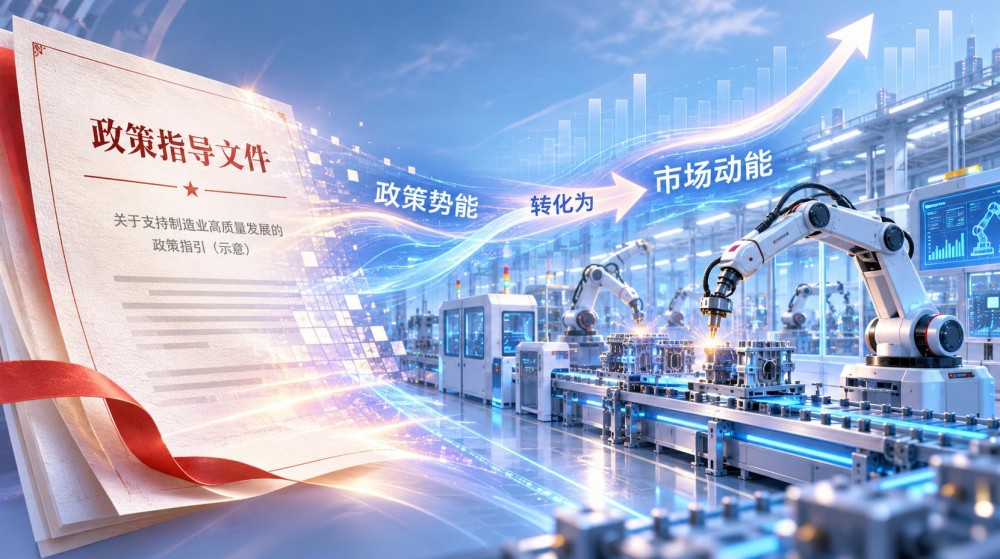
From "Future Industry" to "Priority Track": The Jump in Policy Positioning
According to publicly available information, humanoid robots have appeared with increasing frequency in national industrial plans and policy deployments in recent years, and have been listed among the priority directions for future industries and high-end equipment. The significance of this shift goes far beyond granting an official identity. It signals that capital, talent, sites, and scenarios are beginning to flow systematically toward this track.
The jump in policy positioning can be read at three levels. At the strategic level, embodied intelligence and humanoid robots are repeatedly cited as a key vehicle for artificial intelligence to move from the digital world into the physical one. At the industrial level, policy now emphasizes full-chain layout—from key components to complete machines, from algorithms to applications—rather than isolated breakthroughs. At the application level, there is a push to encourage demonstration and deployment in manufacturing, services, and hazardous operations, using real scenarios to pull technology forward.
This transition from concept advocacy to systematic deployment is the premise for understanding the current policy dividend. It shows that policy has moved past the stage of asking "should we do this" and into the deep water of "how do we do it, and to what standard." For a young industry, that change in framing matters enormously: it converts vague encouragement into a set of expectations that firms can plan against, and it tells investors which parts of the value chain are likely to attract sustained support. It also raises the bar. Once a field is designated a priority track, the tolerance for purely theatrical demonstrations falls, and the demand for verifiable, repeatable results rises accordingly.
The Policy Toolbox: A Combination of Money, Standards, Scenarios, and Platforms
If early policy amounted to little more than slogans and plaques, recent instruments have become far more concrete. Drawing on information disclosed by various localities, several types of tools are now working in combination.
The first is fiscal and financial support: dedicated funds, industry investment vehicles, compensation for first-of-a-kind equipment, and tax incentives on research spending all serve to lower the cost of trial and error. For a capital-intensive, long-cycle industry like humanoid robotics, this kind of patient capital is especially critical. Hardware revisions are expensive, production lines cannot be retooled overnight, and the gap between a working prototype and a shippable product is measured in years. Public money that tolerates a long horizon can make the difference between a company that survives that gap and one that does not.
The second is standards and testing certification. A humanoid robot spans mechanical, electrical, algorithmic, data, and safety dimensions, and the absence of standards directly slows down any attempt to scale. According to public reports, relevant standardization bodies and test-and-evaluation platforms are advancing, and foundational standards for safety, reliability, and interface interoperability are gradually taking shape. Standards-first is often the invisible threshold that lets an industry move from a hundred flowers blooming to something that can be replicated and rolled out. Without common interfaces, every deployment becomes a bespoke integration project; without agreed safety benchmarks, no facility manager will sign off on a machine walking among their staff.
The third is scenario opening and demonstration-led demand. By opening public spaces, publishing scenario lists, and organizing challenge-based procurement, governments provide robots with a place to train. For a humanoid robot company, one real, deployable, paying scenario is often worth more than a subsidy. A subsidy pays the bills today; a paying customer validates the value proposition and generates the operational data that makes the next generation of the product better.
The fourth is innovation platforms and pilot manufacturing facilities. Between a laboratory prototype and a mass-produced machine lies a notorious "valley of death." Intermediate test beds, shared technology centers, and inspection facilities are designed to help companies cross it. Taken together, these four tools form a closed policy loop running from research to piloting to validation to rollout—which is precisely why so many regions are competing to plant their flag in this track.
Zhejiang and Hangzhou: A Scenario-Driven Model
In the competition among regions, Zhejiang and Hangzhou have carved out a distinctive path—driving the industry through scenarios. The key here is not simply the size of the subsidy, but the combination of dense real demand and a digital governance foundation.
In terms of industrial soil, Zhejiang has accumulated rich scenarios across the digital economy, private manufacturing, e-commerce logistics, and future-community programs. Hangzhou, as a digital economy hub, brings together platform companies, algorithmic talent, and venture capital, while manufacturing cities such as Ningbo, Shaoxing, and Wenzhou offer testing grounds ranging from precision lines to flexible production. What these scenarios share is that demand is genuine, iteration is fast, and tolerance for new technology is high—exactly the environment a humanoid robot needs to move from "can do" to "does it well." A robot that can only perform under studio lighting learns very little; a robot asked to work a night shift in a busy fulfillment center learns something new every hour.
In terms of policy approach, Zhejiang emphasizes collaboration between industry, academia, research, and end users, along with first-set application of new equipment. The policy encourages local firms, universities, and research institutes to work jointly with robot companies. This model of nearby matching and closed-loop validation can significantly compress the cycle from technology to product. A supplier of dexterous hands, a maker of reducers, and an integrator can sit within a short drive of one another, iterate together, and see the result deployed in a nearby factory within months rather than years. It is for this reason that HRTE 2027 places its stage in Hangzhou and focuses on the full humanoid robot industry chain—the exhibition is not a policy document, but it is a place where policy is tested in practice.
The Deep End: Safety, Liability, and Data Compliance
Alongside the policy dividend, regulation and standards are advancing in parallel—and it is the latter that often determines how far the industry can go. Unlike conventional automation equipment, humanoid robots enter workshops, communities, and homes, sharing space closely with people, and this raises a new set of questions.
The first is safety standards. A robot that works alongside humans must meet clear requirements in force control, collision protection, and emergency stopping before it can enter a public space. Without a well-defined safety boundary, scenario opening is simply not possible. Insurers, facility operators, and regulators all need a common reference point, and that reference point has to be written down before it can be enforced.
The second is liability. If a robot causes harm, how is responsibility divided among manufacturer, integrator, operator, and user? This is a question that insurance, law, and regulation must answer together. When policy provides a clear framework early, it reduces the compliance uncertainty that otherwise hangs over every deployment and makes it easier for carriers to price the risk.
The third is data and privacy. Humanoid robots carry arrays of sensors and, during patrol or service work, collect information about environments and people. How that data is stored, authorized, and anonymized directly affects acceptance in sensitive settings such as communities and homes. A technically capable robot that makes residents uneasy will not be invited back, no matter how impressive its specifications.
These issues mark the passage of policy from support to governance. A mature industry needs both the accelerator and the brake—only with both can it travel steadily and far. This is where a platform such as HRTE 2027 proves its value: it brings standards bodies, regulators, companies, and users to the same table, so that rules take shape through real-world friction rather than in isolation.
From Policy Heat to Market Cool: A Necessary Correction
It is worth noting that the flip side of dense policy is industry vigilance against overheating. When capital and policy arrive together, the result can be concepts ahead of substance, inflated order books, and demonstrations staged for show. What ultimately decides the direction of the industry is whether value is genuinely created in real scenarios.
A healthy policy ecosystem should reward real deployment rather than real performance art. That means shifting the center of evaluation from "how many plans were published and how many bases were unveiled" to "how many units were deployed, how long they ran stably, and whether customers bought again." The closer policy's gaze stays to real demand, the less water there is in the industry's numbers. Procurement tied to uptime and repeat orders is a powerful filter: it separates vendors who can deliver from those who can only demo.
For Zhejiang and Hangzhou, this kind of correction matters especially. The scenarios here are rich enough—and demanding enough—that a robot sustained only by funding rounds and stage demos will struggle to win a second order from a local customer. That market environment, which votes with its wallet, in turn pushes policy resources toward the companies that are genuinely competitive. It is a form of discipline that no amount of well-intentioned subsidy can substitute for.
Conclusion: Policy Is the Start; Scale and ROI Are the Finish
Looking back on this policy cycle, the deepest change is not the size of the subsidies but the restructuring of the industry's logic. Policy has pushed humanoid robots from laboratory subject to main track, and then pulled them toward scalability through standards, scenarios, and platforms. Yet policy is ultimately a running start. What decides the outcome of the race is manufacturing capability, cost structure, and real return on investment.
Only when policy momentum is converted into market motion can the industry complete its leap from a policy-driven to a market-driven phase. Throughout that process, HRTE 2027 offers a sustained window for observation—from core components to complete machines, from algorithms to scenarios, from standards to capital, the industry's progress will be concentrated on the show floor. Policy has built the stage; the companies now have to make the performance worth watching. For an industry still finding its footing, that transition from applause to accounts receivable is the most important story to follow in the years ahead.

Approved by
Ministry of Commerce of the People's Republic of China
Hosted by
Zhejiang Robot Industry Association
Zhejiang University Robotics Institute
Golden Conference & Exhibition Group
Organized by
Hangzhou Wisdom Source Exhibition Co., Ltd.
Hangzhou Sequoia Exhibition Co., Ltd.
Supported by
Ningbo Magnetic Materials Association
Contact Us